There Is No Brain without a Body
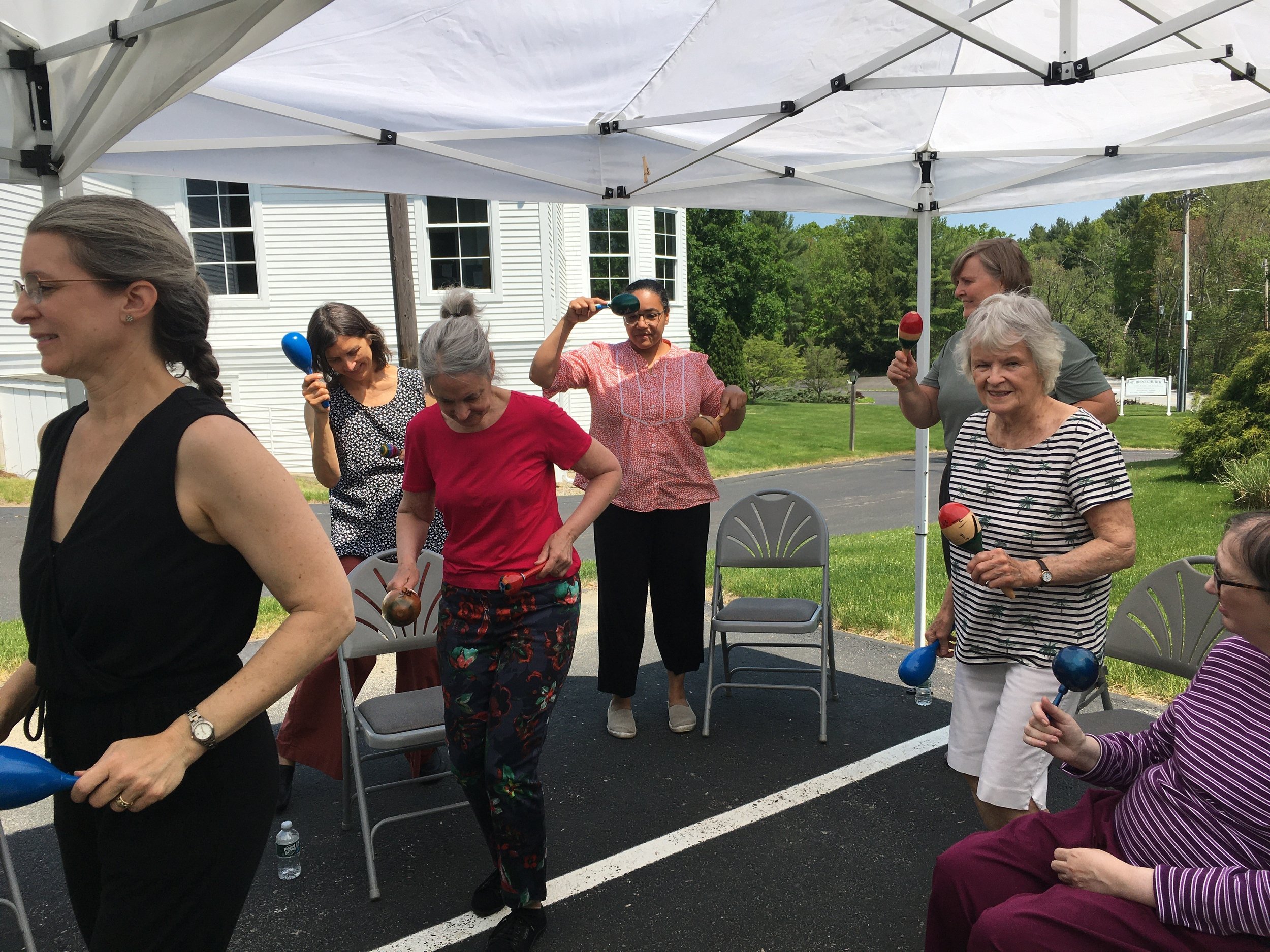
Carlisle Council on Aging 2021 Training Event
Last week I facilitated a memory café for people living independently as well as some in memory care, and where we were joined by 7th graders who were there to volunteer. I also facilitated an improvisational dance class for my peers, all older adults like myself. And, I presented a webinar for the MA/NH Alzheimer's Association about Dance and Brain Health.
Each of these was quite different in terms of participants, their needs and expectations and the challenges they presented, requiring me to be flexible in planning. This in itself is good for my aging brain. Following my groups and workshops, etc., I like to reflect on what I thought went well, what could have been better, and what I learned. This allows me to continually learn and grow and contributes to what I have to offer in my trainings to Bring Dance to Older Adults and People with Dementia.
In the webinar about Dance and Brain/Body Health - after all, there is no brain without a body - I invited people to listen to their bodies about the benefits of dance for 20 minutes and to enter what they noticed in the chat. These were some of their responses: We've got much more alive. Loose, Joyful. Energized. Excited to get the opportunity to move and stretch while at work. Peaceful. Relaxed. Happy. Rejuvenated.
What do you think? Is this just fluff? Or does it have an effect on our brain and body -whole being- health?
This is one of the slides I presented after the experiential:
Why Dance?
improves circulation
flexibility of body and mind
strength
balance
relieves stress and tension
enhances mood
increases alertness through kinesthetic modes of knowing
awakens memories and associations
provides opportunities for self expression
a greater sense of vitality
a form of creative expression
and most importantly, to have fun
Seems to me that what they put into the chat expressed a lot of these benefits. A neuroscientist might have to tell us the parts of our brains that light up when we dance, but we all feel the effects. I want to add something that I don't believe is currently being researched, which is the specific movements that we do when dancing provide different benefits. For example, crossing the midline is important for reading and writing. Also, common sense tells us that increased circulation improves the blood flow to the brain.
I have an in-person training coming up April 19-20. The trainings are immersive in that expressive movement and dance are the primary media for our learning, along with journaling, discussion, powerpoints, and two hour-long groups with people with dementia. The trainings are designed to be meaningful, tailored to every participant and community building, just as the groups with people with dementia are.
CNA Linda Price took a training with me 16 years ago. Just today she spontaneously told me, "Learning from you to bring joy and happiness to our Elders with movement and music was an incredible experience, one of the highlights of my life."
Registration is now open. Limited spots are available. Learn more here. Register here.